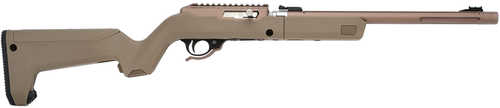
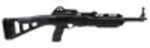
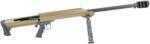
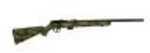
The X-Ring Takedown V R .22LR rifle features an ambidextrous bolt; threaded barrel; green Fiber Optic front sight; micro charging handle; integrated 15 MOA scope base on receiver; Ruger BX-Trigger and Magpul X-22 Backpacker stock. Includes extended mag release.
Brand Tactical Solutions
Category Rimfire Rifles
Series Takedown VR
Model X-Ring
Caliber 22 LR
Stock Finish Group Brown
Capacity 10+1
Stock Material Synthetic
Action Bolt
Oal 34.25"
Hand Ambidextrous
Sights Adj Fiber Optic Front & Rear
Barrel Finish Quicksand
Barrel Material Steel
Muzzle Target Crown
Twist 1:16"
Receiver Description Scope Rail
Thread Pattern 1 / 2"x28
Stock Description Magpul X-22 Backpacker
Barrel Description Threaded
Barrel Length 16.50"
Length of Pull 12.75"
Max Capacity 10
Receiver Finish Quicksand
Trigger Ruger BX
Weight 3.50 lbs
Stock Finish Flat Dark Earth
Caliber Dictionary
The Below Information Has Been Provided From Our Gun Caliber Dictionary And Is Meant For Informational Purposes Only. It Is Not Intended to Describe The Unique Specifications For This Ammunition.
The 22 Long Rifle is the world's most popular cartridge, with annual production well into the billions of rounds. Developed in 1887 for blackpowder, it has been loaded with smokeless powder since the 1890s. The 22 Long Rifle is a rimfire cartridge using the .613-inch case developed for the 22 Long, but standard is a heavier 40-grain bullet at 1180 feet per second. .22 Long Rifle ammunition is widely manufactured and varies tremendously, from sub-sonic and match ammunition at lower velocities to lighter bullets at higher velocities, all the way to a 30-grain bullet at 1700 feet per second. With low report, almost no recoil, and superb accuracy the 22 Long Rifle has no equal for short-range target shooting, plinking, and training in both rifle and pistol; and with high velocity hollow-point ammunition is extremely effective for small game and pests out to perhaps 75 yards. Virtually all manufacturers offer 22 Long Rifle, with choices in both rifles and handguns in all action types. — Craig Boddington