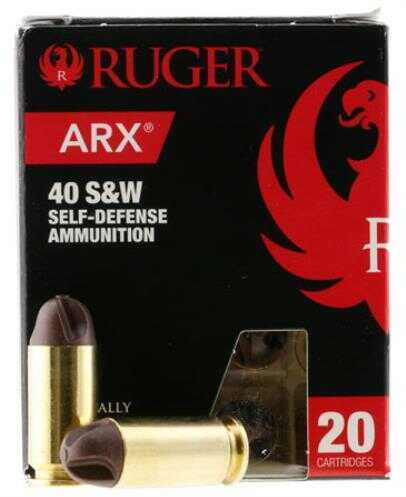
The non-expanding ARX is injection-molded from a specially blended
copper/polymer matrix that is designed to be tough enough to penetrate soft
targets and tissue, but when it encounters tougher barriers it is designed
to break apart to reduce the risk for collateral damage due to over
penetration. Even the heaviest clothing barriers have no effect on the
terminal performance of the ARX bullet. The ARX penetrates straight until
it encounters soft tissue. Upon entering soft tissue, the specially
designed grooves in the nose harness the rotational energy of the bullet
during the initial 6" of penetration. As the bullet penetrates it tumbles
in a controlled, predictable fashion that delivers very consistent terminal
performance that equals or exceeds conventional hollow point designs. In
soft tissue, the ARX is designed to penetrate 12" to 14", every time..
Manufacturer: Ruger Personal Defense Mfg Number: 40ARXRUG20
The information below comes from our Gun Caliber Dictionary and is for
general reference only. It does not describe the specifications of this
particular item.
Designed by Winchester and introduced by Winchester and Smith & Wesson in 1990, the 40 S&W was designed as a "compromise" semiautomatic pistol cartridge that would offer more performance than the 9mm Luger (9x19)…but would produce less recoil and allow higher magazine capacity than the 45 ACP. Few compromises in the firearms world have ever worked as well. From a manufacturing standpoint many pistols designed for the 9mm could be re-engineered to handle the larger cartridge; in a short time it has become a standard issue in the law enforcement community. Using a .400-inch bullet of from 135 to 180 grains from a .850-inch cae, the .40 S&W produces up to 1205 fps, and although recoil is greater than the 9mm, it is easier to shoot than the 45 ACP, and its greater velocity and smaller bullet diameter aid penetration.
—
Craig Boddington
No reviews yet
Be the first to review this item.
Shipping
Enter your ZIP code for an exact shipping cost on this item.
Hazardous-materials fees, where they apply, are included in the total shown.